New York winters don’t behave in a single pattern, and that’s the first place most online HVAC advice collapses. The conditions you get in Massena or Malone, where –25°F mornings show up without any drama, have nothing in common with what you feel in Long Island or midtown Manhattan. Homeowners often rely on heating services in Massena and Malone to ensure their systems are up to the task. Even within Upstate, Potsdam’s open wind corridors deliver a very different January than Albany’s freeze-thaw cycles or Watertown’s lake-effect punishment. And running heating equipment in older St. Lawrence County housing stock, the drafty two-story homes, the half-insulated attics, the original ductwork from 1978, is an entirely separate challenge that most national HVAC articles simply don’t understand.
So the real question isn’t “Which is cheaper?” or “Which is more efficient?”
It’s which system can handle your specific slice of New York without failing, overworking, or turning your winter bills into a liability? Our HVAC specialists in the North Country can guide you to get the right solution depending on your home’s structure and insulation, and the system type.
Let’s walk through the real-world truth, the kind that comes from living here and working on the equipment through real winters, not from reading spec sheets.
The New York Climate Reality: Why So Many Systems Struggle
New York’s climate zones differ so wildly that it’s almost unfair to compare them under one heading. In the North Country, Massena, Ogdensburg, Canton, Potsdam, multi-day stretches of –10°F to –25°F happen so regularly that homeowners barely react. These extreme lows aren’t just spikes; they linger, and that prolonged cold drains heat from older homes at a speed that exposes every weakness in insulation, windows, duct sealing, and system sizing. Upstate heating services and duct repair specialists are often called in to address these vulnerabilities.
Meanwhile, lake-effect regions like Watertown and Buffalo deal with a completely different type of abuse. The constant cycle of extreme cold followed by sudden thawing, followed again by refreezing, stresses outdoor heat pump coils in a way most manufacturers never fully anticipate. Snowfall there doesn’t just pile up; it drifts, buries outdoor equipment, and freezes onto fan housings. Many homeowners schedule our local heat pump maintenance in Watertown and Buffalo to prevent winter breakdowns.
Downstate, however, sees cold of a different flavor. NYC, Westchester, and Long Island get wet, heavy cold that rarely dips into the negatives but has a way of clinging to your bones. Equipment efficiency is affected more by moisture than by sheer temperature, which means performance is steady but comfort expectations shift.
Add in the fact that 60–80% of homes north of Syracuse were built before modern insulation standards existed, and you start to see why no single heating system works equally well across the state. Our residential heating services in St. Lawrence County and surrounding towns help keep these older homes comfortable and energy-efficient.
How Heat Pumps Really Behave When NY Gets Brutally Cold
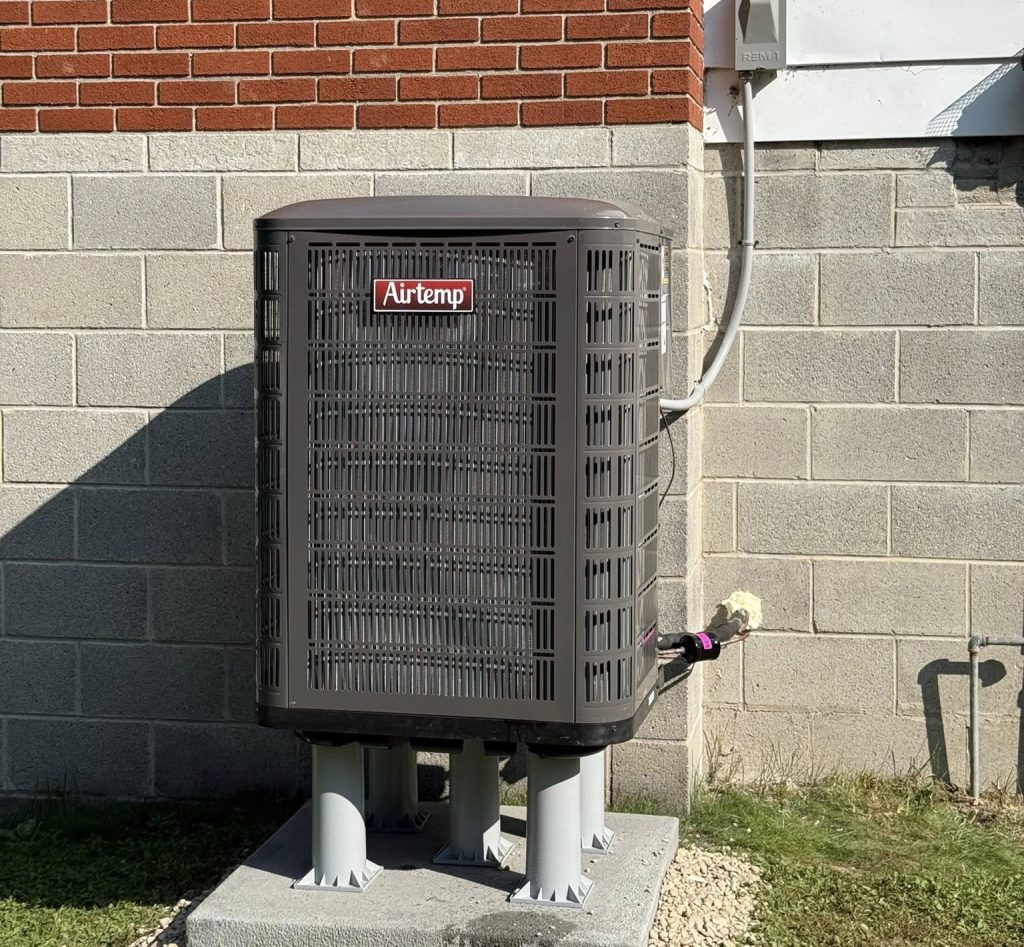
Cold-climate heat pumps have come a long way, and many high-end units truly can maintain usable output at 5°F, 0°F, and even –10°F. But “maintain output” doesn’t mean “keep your home warm without help.” What most homeowners don’t see is how sharply performance curves drop once you hit that 17°F threshold. The moment temperatures dive into single digits, heat pumps rely heavily on longer defrost cycles, faster fan speeds, and, in many homes, backup heat sources that chew through electricity.
Upstate homeowners tell the same stories every winter: rooms that feel noticeably cooler when the unit goes into defrost mode; outdoor coils freezing over when snow drifts pile up; and surprising electric bills during February cold snaps. The issue isn’t that heat pumps don’t work, they do. It’s that they work very differently in the type of deep cold you get around Massena or Saranac Lake than they do in Westchester or Brooklyn. Our professional heating services in Massena, Saranac Lake, and Potsdam tune these systems for optimal performance.
And when the grid gets stressed, especially during those brutal weeks in January or February, heat pumps spike electricity usage in a way that catches many people off guard. It’s not uncommon to see winter bills doubling or tripling from shoulder-season usage.
That said, heat pumps absolutely shine from September into November and again from March through May. Those long shoulder seasons are where they save real money. In downstate areas or in renovated Upstate homes with heavy insulation, they’re borderline perfect. Upstate HVAC companies and energy efficiency specialists can tune these systems to maximize seasonal savings.
The Furnace Side of the Story: Why They Still Dominate Upstate
Furnaces have one core advantage that matters enormously in deep New York cold: they produce consistent heat output regardless of outdoor temperature. Whether it’s 35°F and raining or –20°F with a Northeast wind ripping across the St. Lawrence River, a furnace doesn’t care. It puts out the same BTUs every cycle.
This reliability becomes crucial in drafty homes or in neighborhoods with wind exposure. A quick blast of hot air from a well-sized furnace can recover temperature quickly after a door opens or a wind gust robs the room of warmth, something heat pumps struggle to do quickly when it’s extremely cold.
But furnaces come with their own set of issues. Natural gas has been stable for a while, but New York’s pricing doesn’t always stay predictable. Older venting systems, especially in century-old homes around Canton, Malone, and Ogdensburg, have clay-lined chimneys that are long past their safe years. Many homes are still running oversized 80s and 90s-era furnaces that cycle constantly, waste fuel, and create huge temperature swings.
The tricky thing is that homeowners often misunderstand furnace performance. Power doesn’t equal efficiency. Oversized units wear out faster and deliver less comfort, not more. That’s why furnace maintenance and repair services are so critical.
Durability and Lifespan: What Actually Survives in NY
New York’s winter environment is rough on equipment. Heat pumps sit outside, exposed to freezing rain, blowing snow, road salt, and temperature swings. They work year-round, often running thousands more hours per year than furnaces. That’s why a realistic lifespan in Upstate conditions is closer to 12–15 years, even for high-end cold-climate units.
Furnaces, by comparison, operate only half the year. Their components are simpler, more sheltered, and less exposed to the weather. With consistent maintenance, a furnace can last 15–25 years comfortably in most NY homes.
The hidden killer of both? Old ductwork. Leaky ducts force systems to run harder, cycle more frequently, and fail sooner. A perfectly installed $12k heat pump or $7k furnace can be ruined by ducts losing 20–30% of airflow. That’s why our duct inspection and repair services in Malone are important for comfortable winters.
Energy Costs in 2025: What New Yorkers Actually Pay
Electricity in New York isn’t cheap, hovering around 19–25¢/kWh depending on the region. Natural gas is still cheaper per BTU, but there’s real volatility. For heat pumps, especially in places like Massena or Tupper Lake, the most expensive month is always February, when backup heat kicks in, defrost cycles multiply, and cold air demands longer runtimes.
Heat pumps save real money in downstate regions, in tightly sealed Upstate renovations, or in homes running solar. Furnaces, on the other hand, provide reliable and predictable performance regardless of how brutal the year gets. Our Local HVAC specialists in Massena, Canton, and Malone can advise you on the most cost-efficient setups.
NYSERDA rebates tilt the financial picture; heat pumps receive the biggest incentives, often several thousand dollars. This helps with installation cost, but doesn’t overcome physics during extreme cold.
The Real Indoor Comfort Everyone Need During Winter
The type of heat matters. Furnaces deliver warm, fast, high-BTU air that fills a drafty room quickly, which is ideal for older Upstate homes. Heat pumps produce a gentler, continuous heat that feels fantastic in well-insulated homes but can feel underwhelming in a leaky farmhouse or a 1950s split-level.
Furnaces can dry out the air significantly, especially in Adirondack cold spells, while heat pumps keep steadier humidity levels because they run longer cycles.
And when it comes to recovery time: that moment when the kitchen door closes, and the cold rushes in, furnaces win by a mile. Heat pumps lag in extreme cold by nature of their entire operating strategy. Our residential HVAC and heating repair services in Adirondacks and surrounding towns can optimize both systems for a comfort living through winters and seasons afterwards.
Safety and Reliability in the Worst Weeks of Winter
Power outages are a fact of life in rural Upstate New York. Ice storms and heavy snow knock out power across areas like Massena, Madrid, Fort Covington, and Parishville for 12 hours or more at least once most winters. Heat pumps shut down completely in those moments unless you have backup power. A furnace, paired with a small generator, often provides more reliable emergency heat.
But furnaces bring combustion safety concerns, such as carbon monoxide, blocked vents, and cracked exchangers, especially in homes with very old equipment. Heat pumps eliminate those risks but introduce different challenges, like ice buildup damaging outdoor components. Certified local HVAC and heating services in Upstate NY help mitigate these risks.
The Honest Bottom Line: Hybrid Systems Win 2025
Across most of New York, the setup that makes the most sense is a hybrid system: a heat pump running most of the year, paired with a furnace that takes over when temperatures fall below your balance point (often around 20–25°F Upstate). This combination cuts fuel costs, avoids massive electric bills, handles shoulder seasons perfectly, and provides dependable deep-winter performance.
Full heat pump systems make total sense in NYC, Long Island, Westchester, and newer/renovated Upstate homes with excellent insulation.
Full furnace systems remain the best option for drafty older homes, rural areas with frequent outages, and homes with limited electrical capacity.
Final Guidance: Choose Based on Your Reality, Not Marketing
Your ZIP code matters.
Your home’s age matters.
Your insulation level, your ductwork, your utility rates, and your winter exposure all matter far more than the brand on the equipment.
There’s no universal winner, but there is a right answer for your home and your climate pocket. And if you want, Energy Wise Builders’ offers professional heating services in Massena, Canton, Potsdam, and Malone, and can help you narrow it down with your town, home size, insulation, gas availability, and utility rates. Just tell us where you’re located and what you’re working with.